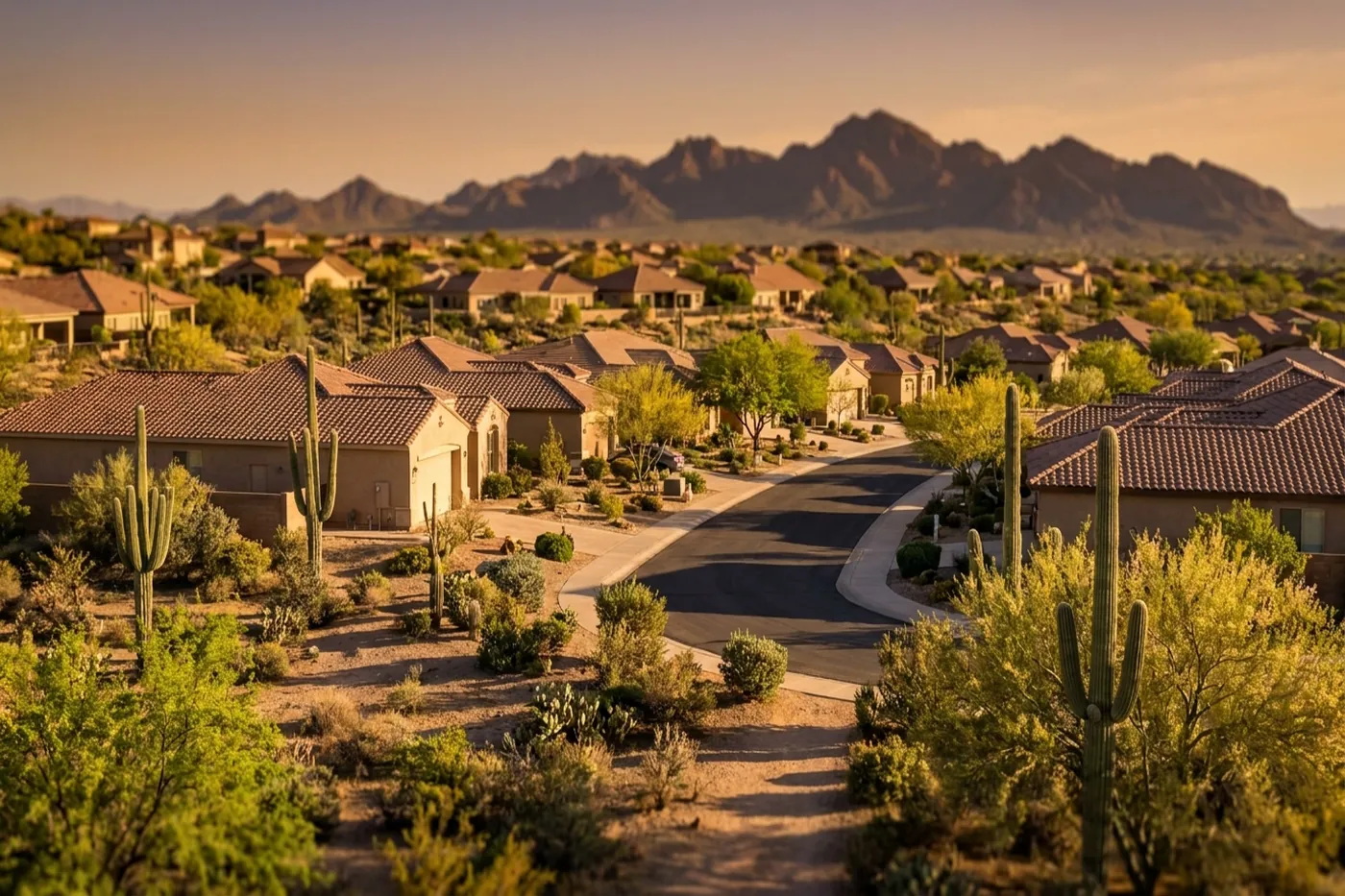
A water softener in Peoria costs $1,500–$4,500 installed. The city blends Central Arizona Project, Salt River Project, and well water, and its published mineral levels work out to roughly 16.5 grains per gallon of hardness on average — very hard — so most homes need a properly sized ion-exchange softener.
Below: how to tell your water is hard, why it varies street to street here, what each system type does, and what installation involves in West Valley homes.
How do you know your Peoria home needs a softener?
Few people test their water. They notice what hard water leaves behind:
- Chalky white scale on faucets, shower glass, and pool tile lines that comes back days after cleaning
- Spotted dishes and cloudy glassware straight from the dishwasher
- Shampoo that won't lather and skin that feels tight and itchy in our dry air
- Crusty white buildup on swamp-cooler pads, drip emitters, and sprinkler heads
- A water heater that pops and rumbles — sediment baking on the element
- Appliances dying young — ice makers, dishwashers, and coffee makers scale up fast here
Two or three of these together is hardness at work. It isn't a health problem — it's an equipment and comfort problem, and in the Sonoran Desert it compounds quickly because we run so much water through evaporative systems.
Why is Peoria's water so hard — and why does it vary by street?
Per the city's 2025 Water Quality Report, Peoria draws 61% of its supply from the Colorado River through the Central Arizona Project canal, 31% from the Salt River Project, and 8% from city wells. All three sources cross hundreds of miles of mineral-rich desert rock before reaching the Pyramid Peak treatment plant the city co-owns with Glendale — picking up the calcium and magnesium that make water "hard."
Because your tap gets a blend that shifts by neighborhood and season, the city's published mineral ranges work out to anywhere from roughly 9 to 30 grains per gallon. A Vistancia home and an Old Town home can test meaningfully different on the same day — which is why we measure at your tap before recommending a size, rather than quoting off a citywide number.
What does a water softener actually do?
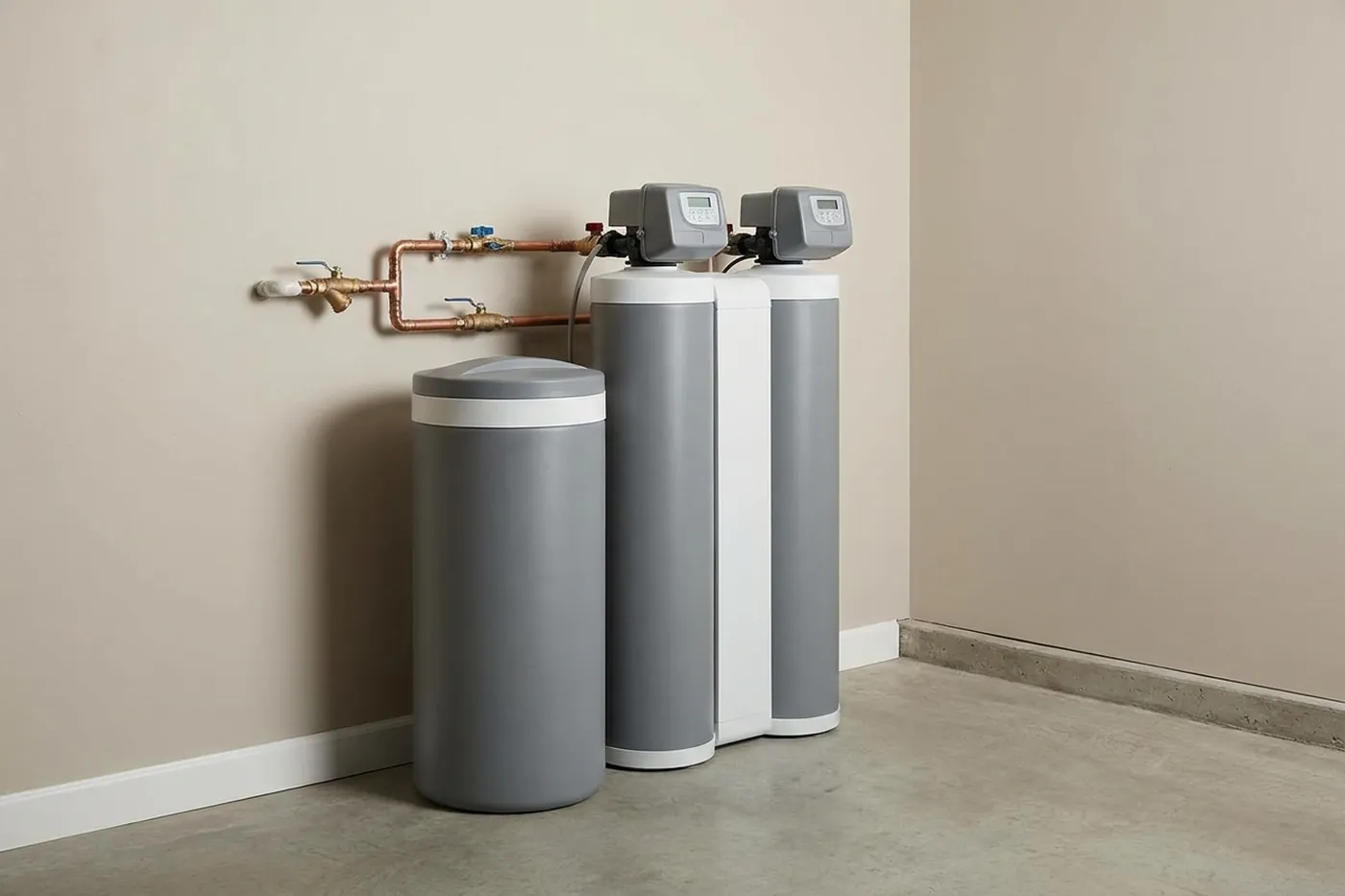
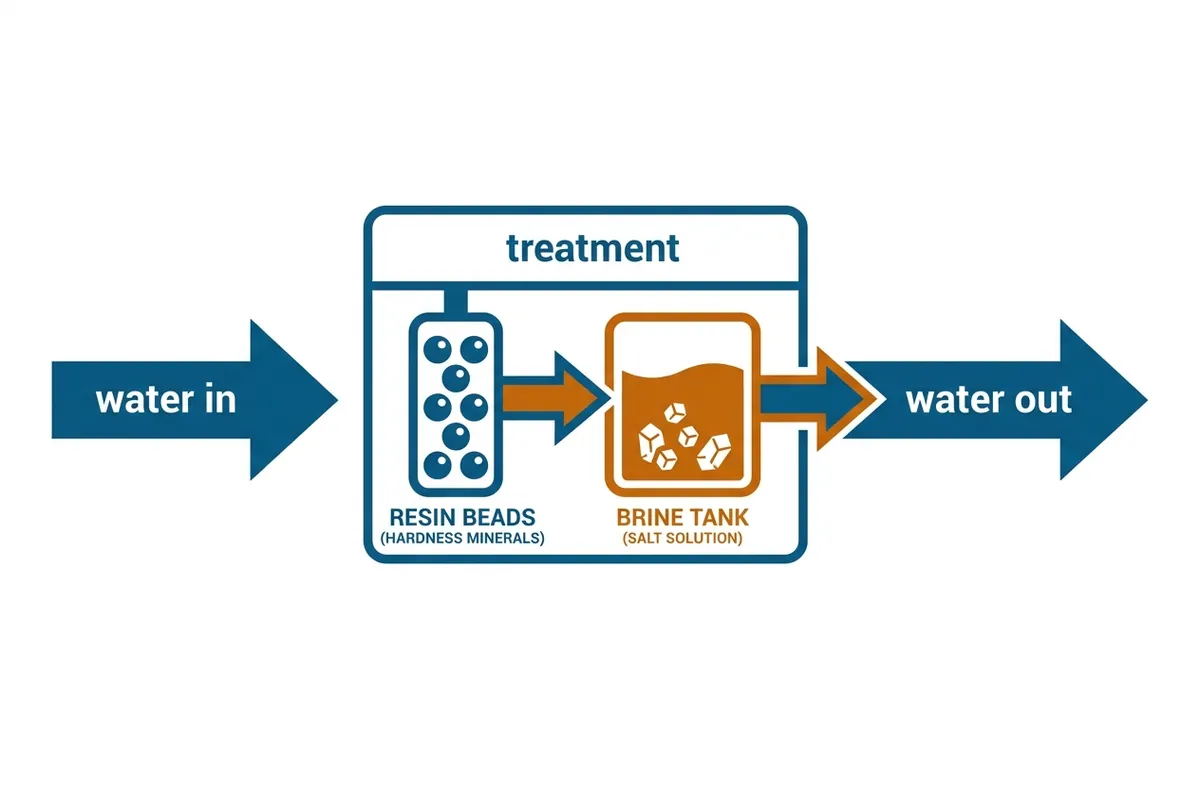
A salt-based softener passes incoming water through a resin bed that swaps calcium and magnesium ions for a trace of sodium — ion exchange. Overnight, the system rinses the resin with brine and sends the captured minerals down the drain, ready for the next day. What changes at your fixtures: scale stops accumulating, soap works, glass rinses clean, and your water heater stops cooking minerals onto its element — a real cost on 16-grain water.
Which system fits your home?
| System | What it does | Maintenance | Best for | Installed cost |
|---|---|---|---|---|
| Salt-based softener | Removes hardness minerals by ion exchange | Salt refill every 4–8 weeks | The default on Peoria's very hard blend | $1,500–$3,500 |
| Salt-free conditioner | Conditions minerals so they scale less; hardness stays | Minimal | HOA salt concerns, lighter needs | $1,000–$2,500 |
| Whole-house filtration | Cuts chlorine taste, odor, sediment | Media or cartridge changes | Taste and odor complaints | $1,000–$4,000 |
| Reverse osmosis | Removes dissolved solids at one tap | Annual filter change | Drinking water; the city reports low-level arsenic below limits | $300–$1,200 |
Sizing matters as much as type: grain capacity has to match your household size, bathroom count, and where your home sits in Peoria's 9–30 gpg range. Undersized units regenerate constantly and wear out early; oversized ones waste salt and water. We calculate it from your actual tap test.
What does installation involve?
- Free in-home assessment and tap test — your actual hardness, not the citywide average
- Sizing to household demand and your measured grain load
- Connection at the loop or main with an accessible bypass valve
- Drain and overflow routing for regeneration
- Programming and startup, then a pressure leak check
- Walkthrough — salt levels, bypass use, what normal operation sounds like
Homes with a softener loop — standard in most West Valley construction since the 1990s — take two to four hours. Older homes needing a tie-in usually take most of a day.
Softener leaking right now?
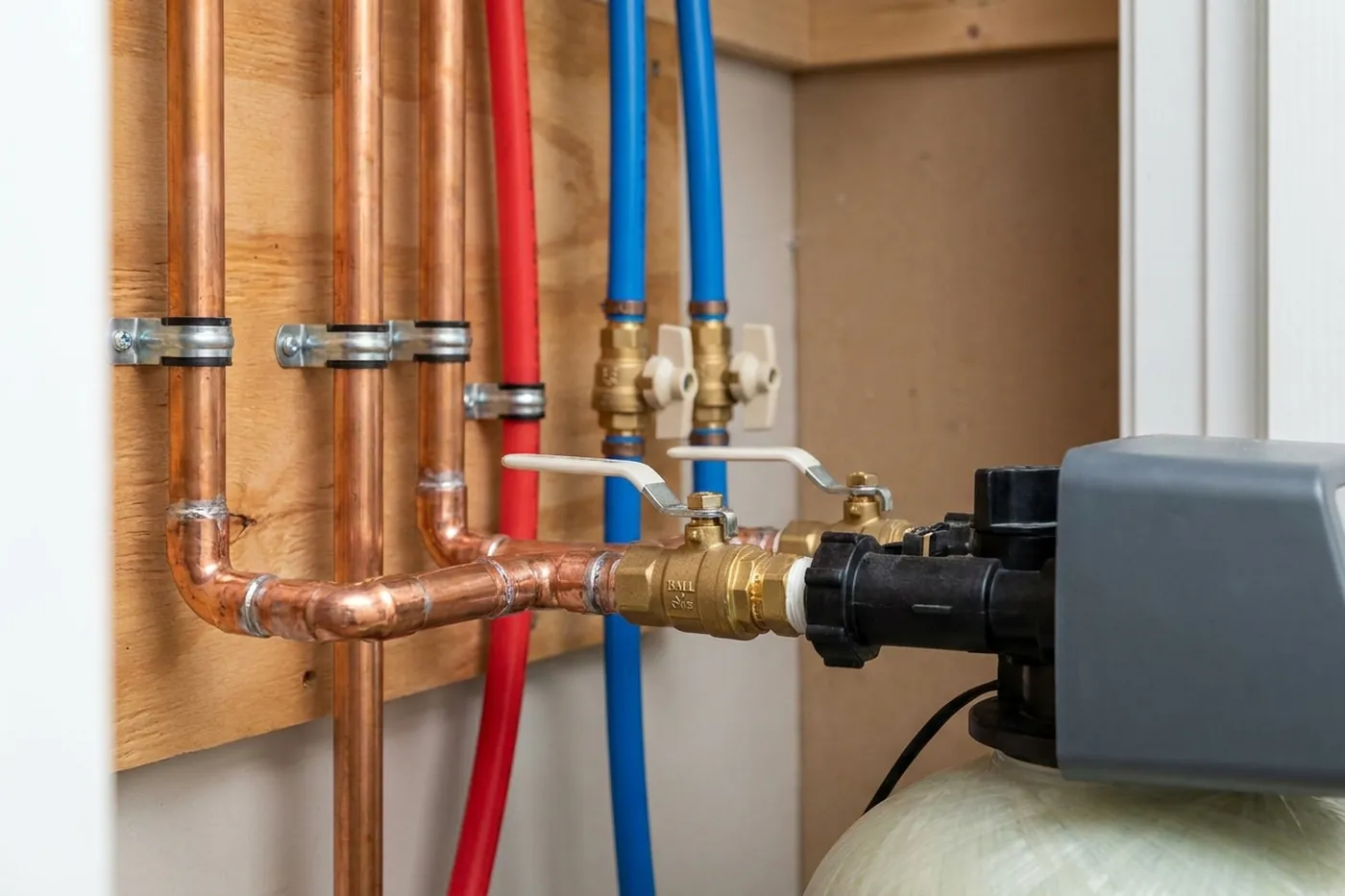
Put the unit in bypass — the valve on the plumbing behind the tank — and the house keeps running while the leak stops. Can't find it? Shut off the main at the street side. Then call (623) 267-9628. We answer after hours and on weekends, and active leaks get same-day or next-day service.
Our services
Every common residential water treatment need in the West Valley:
Water Softener InstallationWater Softener RepairWhole-House Water FiltrationReverse Osmosis Drinking WaterSalt-Free Conditioners & Salt Delivery
Where we work
The West Valley's housing stock runs from 1950s retirement bungalows to brand-new master-planned construction — and the right install differs accordingly:
Water softener installation in PeoriaWater softener installation in GlendaleWater softener installation in SurpriseWater softener installation in Sun CityWater softener installation in Sun City WestWater softener installation in El MirageWater softener installation in YoungtownWater softener installation in Litchfield ParkWater softener installation in Waddell
And for the restaurants, salons, and medical suites running the same 9–30 grain blend at business volumes, our commercial water softeners in Peoria are sized for the top of the range — duplex systems included.
Frequently asked questions
Is Peoria tap water hard?
Peoria tap water is hard. Peoria blends Colorado River water from the Central Arizona Project (61%), Salt River Project water (31%), and city wells (8%). Based on the calcium and magnesium levels in the city's 2025 Water Quality Report, hardness works out to roughly 16.5 grains per gallon on average — very hard by USGS standards.
Why does water hardness vary so much across Peoria?
Because the supply is a blend. Depending on where you live and the season, your tap may carry more canal water or more well water, and the city's published mineral ranges span roughly 9 to 30 grains per gallon. That is why we test at your tap instead of quoting from a citywide average.
How much does a water softener cost in Peoria?
Most whole-home installations run $1,500 to $4,500 installed, depending on system capacity, salt-based versus salt-free, and whether your home needs new plumbing or a drain connection. Our Water softener installation cost breakdown for Peoria shows what drives each figure, line by line.
How long does installation take?
Two to four hours when the house has a softener loop — common in Vistancia and most West Valley construction from the 1990s onward. Older homes needing a tie-in at the main usually take most of a day.
How often will I add salt?
On water this hard, most households refill every four to eight weeks. Larger families and homes on the harder end of the blend regenerate more often. Our salt delivery service handles refills if you'd rather not haul bags.
Will a softener fix the taste of my water?
Not by itself. Softening removes hardness minerals. Taste complaints usually trace to chlorine and dissolved solids, and Peoria's own report notes low-level arsenic below federal limits — a reverse osmosis system at the kitchen tap is the right tool for drinking water.
Do you serve Sun City and Sun City West?
Yes — both, along with Glendale, Surprise, El Mirage, Youngtown, Litchfield Park, and Waddell. Note that parts of the area are served by private utilities like EPCOR, Sunrise, and Rose Valley, so we confirm your actual supplier before sizing anything.
Do I need a permit to install a softener?
Straightforward replacements usually don't. New plumbing, drain work, or exterior installs can require one. We tell you before work starts if a permit applies to your job.
Get a free Peoria estimate
Tell us what you're seeing at your fixtures and we'll recommend a system sized to your home. We reply the same business day.