
Whole-house water filtration in Peoria costs $1,000–$4,000 installed. With 92% of the city's supply coming from CAP and SRP surface water, carbon filtration targets what a softener can't: chlorine taste and odor, sediment from canal water, and disinfection byproducts like trihalomethanes.
What filtration does and doesn't do, how it pairs with softening, and what fits West Valley homes.
What's actually in Peoria's water?
The city's 2025 Water Quality Report shows treated surface water well within federal standards — and carrying the things treated surface water always carries: a chlorine residual to keep it safe in the pipes, trace organics, and the disinfection byproducts they form together. None of it is a health emergency. All of it is filterable, and the difference at the shower and the coffee maker is immediate.
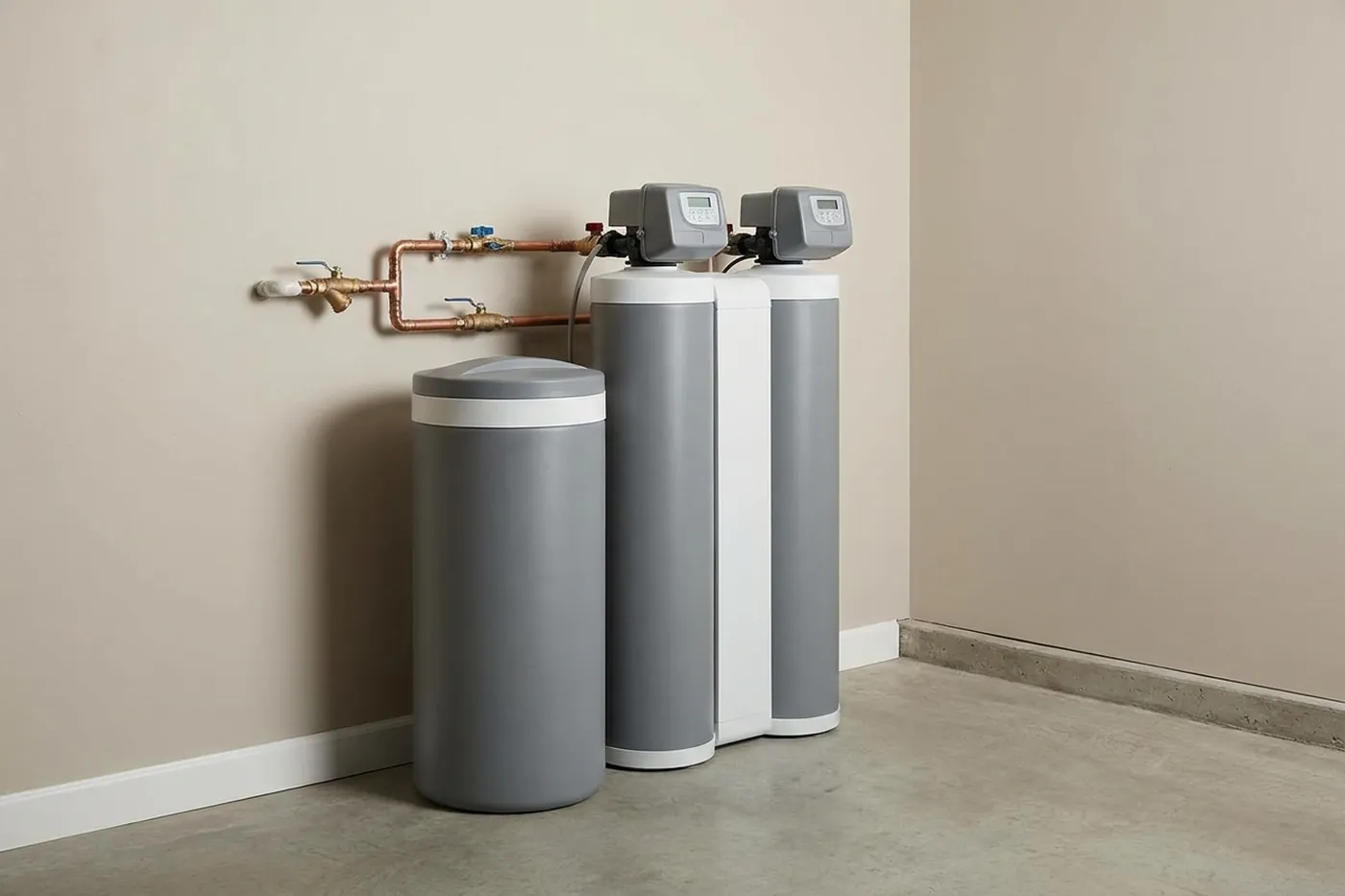
Filtration and softening solve different problems
| Problem | Right tool | Wrong tool |
|---|---|---|
| Scale, spots, stiff laundry | Softener | Filtration won't touch hardness |
| Chlorine taste and smell | Carbon filtration | A softener passes chlorine through |
| Sediment and grit | Sediment pre-filter | Either alone |
| Drinking-water polish | Reverse osmosis at the sink | Whole-house RO is overkill |
Most Peoria homes that treat their water end up with a stack: sediment pre-filter, carbon, softener — sharing one loop and one drain. Installed together, the plumbing cost is shared too. The order matters as well: carbon belongs upstream of the resin so chlorine never reaches it, the sediment cartridge belongs first so canal grit never reaches either, and the drain serves all three — details a combined install gets right by default and a piecemeal one often doesn't.
Peoria's disinfection byproducts, by the numbers
The city's 2025 report lists total trihalomethanes averaging 54.6 µg/L across sampling sites, with individual results ranging 28.2 to 105 against a federal running-average limit of 80. Compliant — and exactly the kind of number that explains why whole-house carbon is the most requested filtration add-on in canal-fed cities: activated carbon reduces both the chlorine residual and the byproducts it forms. If you've noticed the pool-water smell strongest in summer, that's the seasonal chemistry at work, and it's filterable.
Pairing filtration with a water softener installation
The two systems are natural roommates: the carbon bed strips chlorine ahead of the softener, which protects the softener's resin (chlorine degrades it over time), and both share the same loop, drain, and service visit. Installed together they cost meaningfully less than as two separate projects — and the estimate covers both with one tap test.
What does canal water do to a filter schedule?
Surface water carries fine sediment that groundwater systems never see, and West Valley media beds load up accordingly — especially in monsoon season when canal turbidity spikes. We size carbon beds with that in mind and set service intervals from your actual water use rather than a brochure number. Homes that pair the two systems share one loop and one drain, which is why the combined install usually costs less than doing the two jobs a year apart.
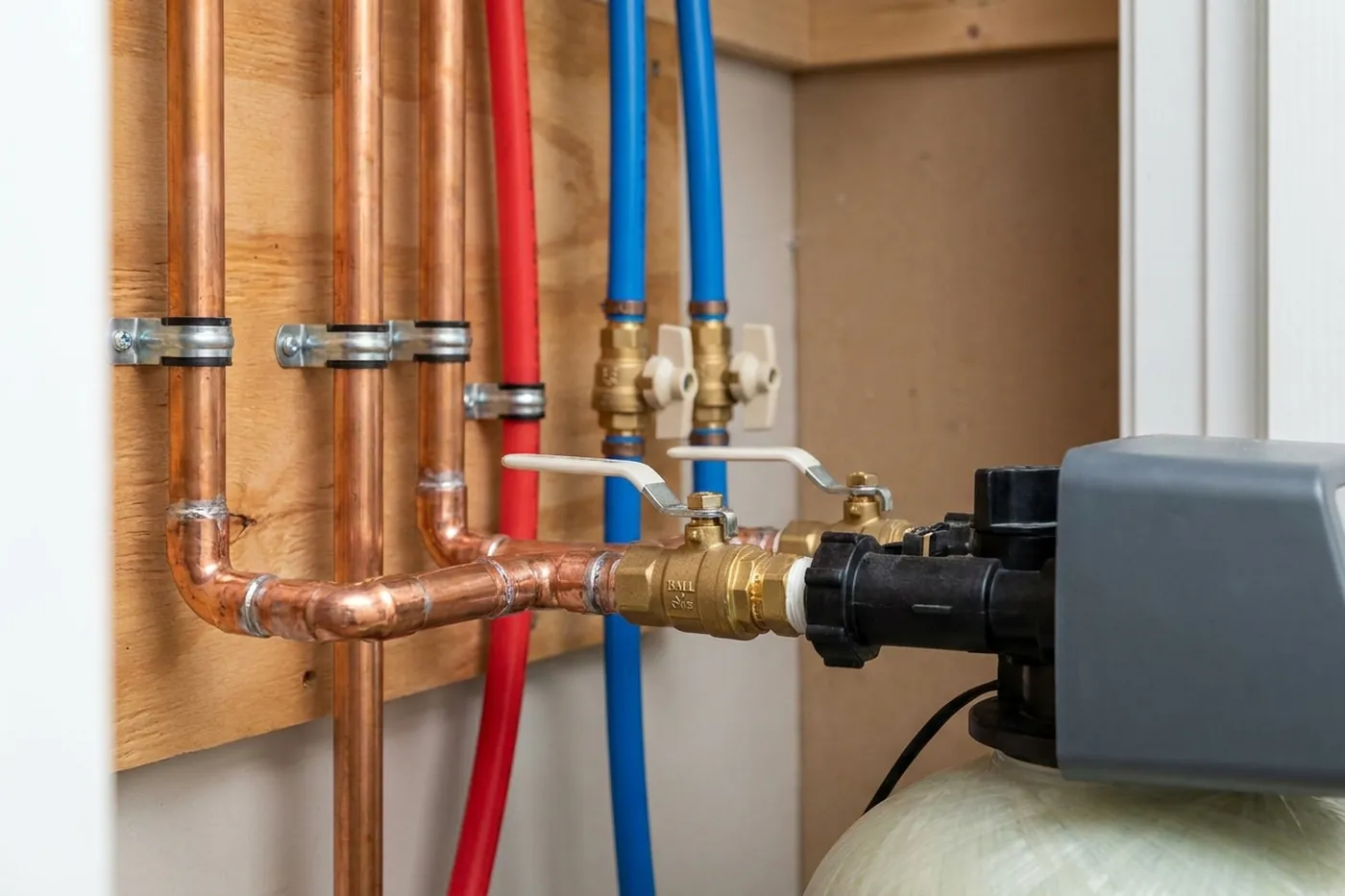
How we size a carbon bed
Carbon capacity is contact time: water has to spend enough seconds in the media for adsorption to work, so the tank size follows your peak flow — bathrooms, people, and irrigation load — not a one-size sticker. Undersized beds let chlorine slip through at peak demand; oversized ones channel and waste media. We calculate from your fixture count and measured flow at the estimate, the same visit that tests hardness, so the whole treatment stack gets sized from one set of real numbers.
Frequently asked questions
What does whole-house filtration remove that a softener doesn't?
Chlorine taste and odor, sediment, and organic compounds. A softener removes hardness minerals only — the two systems solve different problems and are often installed together on one loop.
Why does Peoria tap water taste like chlorine?
Surface water from the CAP and SRP canals is disinfected at the treatment plant, and the residual stays in the line to keep water safe on the way to you. Carbon filtration removes it at the house after it has done its job.
What are trihalomethanes?
Byproducts that form when chlorine reacts with organic matter in surface water. Peoria's 2025 report lists them within federal limits; whole-house carbon reduces them along with the chlorine itself.
How often does the media need changing?
Cartridge systems every 6-12 months; tank-based carbon beds typically every 3-5 years depending on water use. We size the bed so you're not paying for capacity you can't use.
Can filtration and a softener share one install?
Yes — they stack on the same loop and drain, and installing both in one visit shares the plumbing cost. It's the most common whole-house package in the West Valley.
Get a free Peoria estimate
Tell us what you're seeing at your fixtures and we'll recommend a system sized to your home. We reply the same business day.